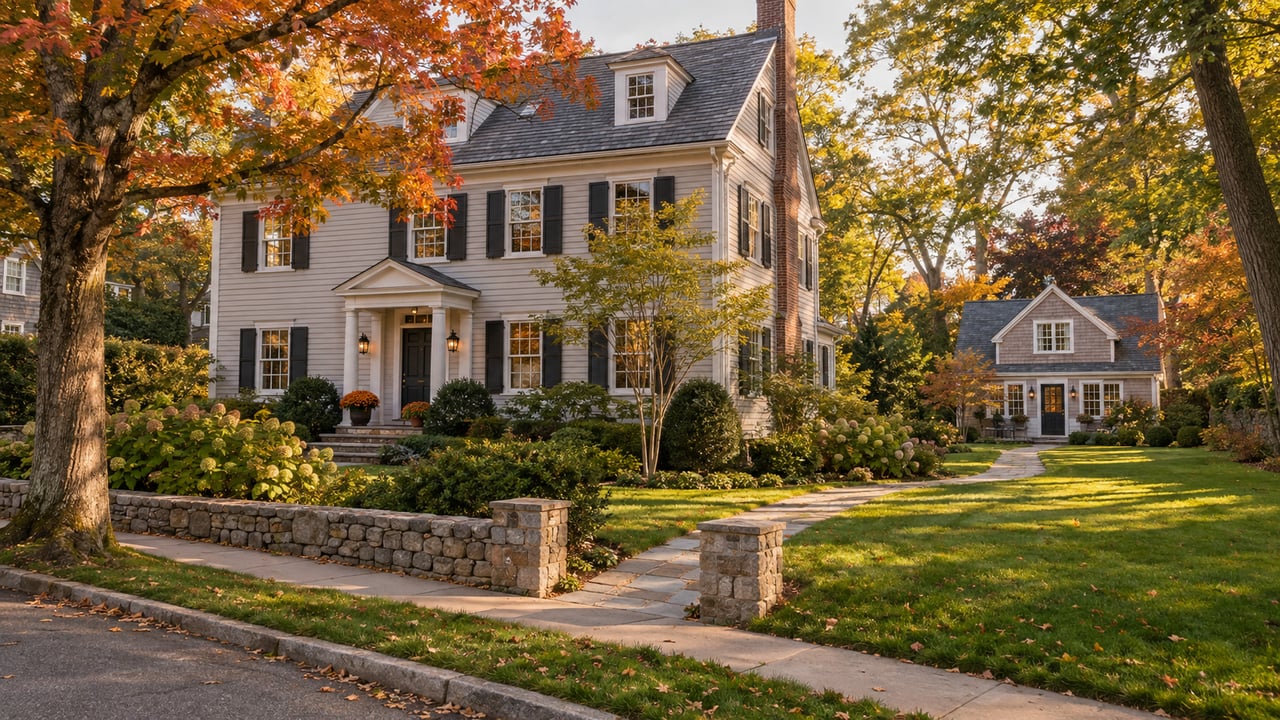
Yes. If you own a home in a single-family zoning district in Newton, you can generally add one accessory dwelling unit (ADU) with just a building permit, as long as it's no bigger than 1,000 square feet or 50% of the main home's floor area, whichever is smaller. You don't have to live on the property, but you can't sell the ADU separately as a condo or use it as an Airbnb.
If you've been asking "can I build an ADU in Newton, MA?", the timing is good. The state's Executive Office of Housing and Livable Communities (HLC) opened public comment on proposed revisions to the statewide ADU regulations on September 11, 2026, so the rules are getting a fresh look this fall.
Key takeaways
- Massachusetts has allowed ADUs by right in single-family zoning districts since February 2, 2025, under the Affordable Homes Act.
- In Newton, new internal and detached ADUs are allowed by right up to 1,000 sq ft or 50% of the main home, whichever is smaller. Only a building permit is required.
- Towns can't require the owner to live on-site, but Newton requires the ADU and main house to stay under common ownership and prohibits short-term rentals.
- Statewide, 2,824 ADU applications were filed and 2,084 were approved from January 2025 through June 2026, according to HLC.
- HLC is accepting public comment on proposed ADU regulation changes through 11:59 p.m. on October 9, 2026.
What's changing with ADU rules in Massachusetts this fall?
HLC is proposing revisions to 760 CMR 71.00, the regulations that govern "Protected Use" ADUs, with public comment open from September 11 through October 9, 2026. The underlying law, which lets homeowners build one ADU by right in single-family zoning districts, isn't going anywhere. The regulations are how the state fills in the details.
The program is clearly getting used. According to HLC's ADU tracker (last updated August 12, 2026), cities and towns received 2,824 ADU applications and approved 2,084 between January 2025 and June 2026. About half of those approvals were for detached ADUs, like backyard cottages or converted garages.
If you want to weigh in, the state's comment form is here, and the redlined draft is linked from the mass.gov ADU page.
Can I build an ADU in Newton, MA, and how big can it be?
In Newton, you can build a new internal or detached ADU by right up to 1,000 square feet or 50% of the main home's total floor area, whichever is smaller, according to the City of Newton. By right means no special permit and no zoning board hearing. You still need a building permit.
That's slightly more generous than the state floor. Here's how the two compare:
Rule | State minimum (Affordable Homes Act) | Newton |
|---|---|---|
Max size, by right | 900 sq ft or 50% of main home, whichever is smaller | 1,000 sq ft or 50% of main home, whichever is smaller |
Approval needed | No special permit for a protected ADU | Building permit only |
Owner must live on-site | Towns can't require it | Not required |
Sell ADU separately | Not addressed as a right | No, must stay under common ownership |
Short-term rentals | Towns may restrict or prohibit | Prohibited; rentals must be longer than 30 days |
Parking | Towns can require at most 1 space, or none within 0.5 miles of transit | Check with the city for your lot |
Setbacks, height limits, and design details still apply. Newton's ADU page walks through them, and it's worth a call to the Planning Department before you pay an architect.
Do I have to live on the property, and can I rent the ADU out?
No, you don't have to live on the property, and yes, you can rent the ADU to a long-term tenant. The state law bars cities and towns from requiring owner occupancy of either the ADU or the main home, and it bars requiring that the ADU tenant be related to the owner.
That was a real change for Newton. The city's old ordinance required the owner to live on-site and file an annual certification with Inspectional Services. The City Council updated the ordinance in 2025 to line up with state law.
Two limits stay in place in Newton:
- No condo split. The ADU and main house can't be sold separately.
- No Airbnb. Short-term rentals are prohibited. Leases must run longer than 30 days.
What does it actually take to get an ADU approved?
It takes a building permit plus compliance with building, fire, energy, and utility requirements, and those are where the real cost and time live. When HLC surveyed local building officials, they flagged a few common cost drivers:
- Energy code compliance, especially for ADUs built inside an existing home
- Fire separation for attached units, sometimes including sprinklers
- Fire lane access for some detached units
- Separate utility connections for water, sewer, or electric, which some utilities require
- Septic upgrades on properties that aren't on town sewer
Our take: get your contractor and the city involved before you fall in love with a floor plan. The zoning is the easy part now. The build is where budgets get tested.
What this means for buyers
If you're shopping in Newton, a home with ADU potential gives you options that didn't exist a couple of years ago. Space for extended family, a caregiver, or a long-term tenant can change how a house works for you over time.
A few things to do before you make an offer:
- Ask for permits and the certificate of occupancy on any existing ADU. An unpermitted "in-law" isn't the same thing as a legal ADU.
- Check the lot, not just the house. Setbacks, lot shape, and utility access decide whether a detached ADU is realistic.
- Don't underwrite the purchase on rental income you haven't priced out. Build costs and timelines vary a lot.
What this means for sellers
If you already have a permitted ADU in Newton, it's a feature worth marketing clearly. Have your permits, certificate of occupancy, and any current lease ready before you list. Buyers and their attorneys will ask.
If you have a tenant in the ADU, talk with your attorney early about how that lease affects showings and closing. And if you don't have an ADU but your lot could support one, that's worth mentioning to buyers, as long as you describe it as potential and not a promise.
FAQ
Can I turn an old carriage house or garage into an ADU in Newton?
Often, yes. Converted garages and carriage houses are common detached ADUs, and Newton has specific provisions for historic carriage houses that can allow them to bypass some size, height, and setback limits. Check with the Planning Department about whether your structure qualifies.
Is there financing help for building an ADU in Massachusetts?
There are state-connected programs worth a look. The mass.gov ADU page links to MassHousing's ADU financing and the Massachusetts Housing Partnership ADU incentive program. Eligibility and terms vary, so confirm the details directly with each program.
Will adding an ADU affect my homeowners insurance?
It can. The Massachusetts Division of Insurance published guidance on insuring protected ADUs in October 2025. Call your insurance agent before construction starts so coverage keeps pace with the project.
Do the same ADU rules apply in Wellesley, Needham, or other nearby towns?
The by-right protection applies to single-family zoning districts statewide, but each community can set its own reasonable rules on things like setbacks, height, site plan review, and short-term rentals. Always check the specific town's current bylaw.
How do I comment on the proposed state ADU regulations?
Use the online comment form on mass.gov or email [email protected] with "Comments on 760 CMR 71" in the subject line. Comments are due by 11:59 p.m. on October 9, 2026.
Thinking about buying or selling in Newton?
Whether you're weighing a home with an in-law suite or getting a property with an ADU ready for market, the team at Berkshire Hathaway HomeServices Warren Residential works with buyers and sellers across Newton, Boston, and the surrounding towns every day. Reach out to our team and we'll help you figure out what the rules mean for your specific property.