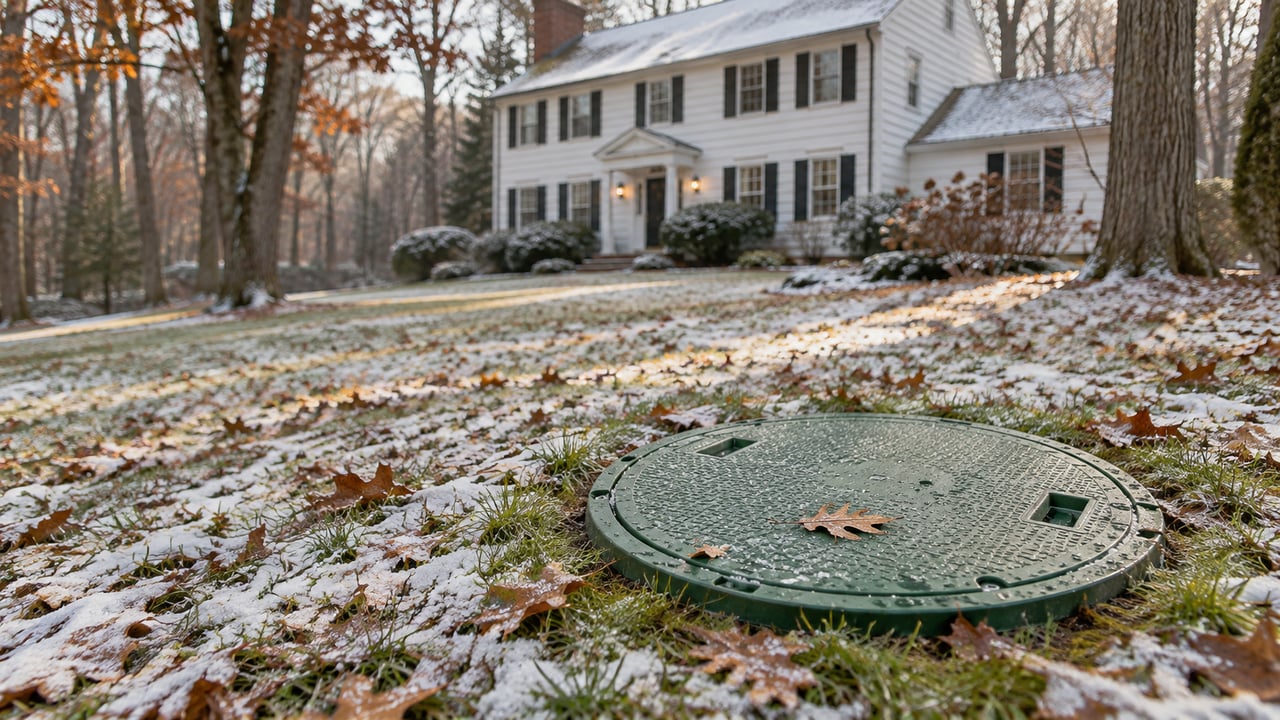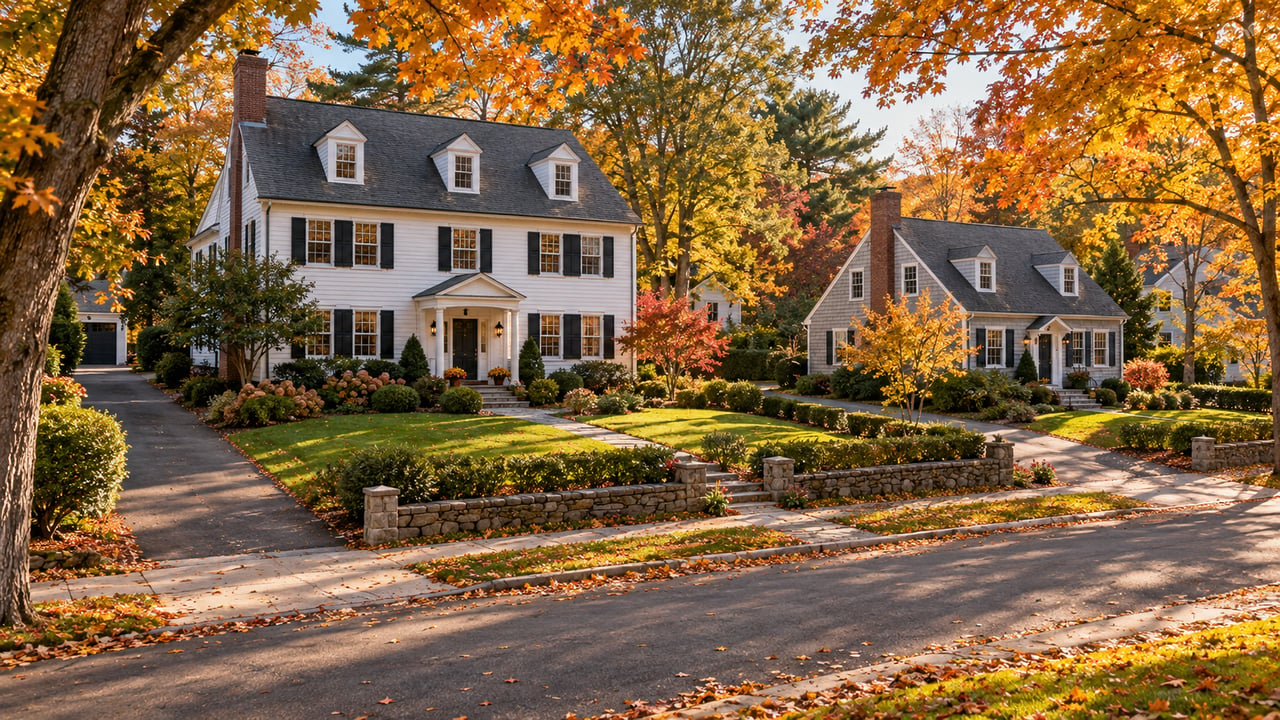
If Question 7 passes on November 3, 2026, Wellesley homeowners could build a single-family home on any residential lot of at least 5,000 square feet that has 50 feet of street frontage and access to public sewer and water. That's a big change in a town where current minimums run from 10,000 to 40,000 square feet. It would not force anyone to subdivide, but it would change what some lots in Wellesley could be used for, and that matters to buyers and sellers alike.
Key takeaways
- Question 7 would cap minimum lot sizes for single-family homes at 5,000 square feet statewide, but only for lots with at least 50 feet of frontage and access to public sewer and public water.
- Wellesley's zoning bylaw currently requires 10,000, 15,000, 20,000, 30,000, or 40,000 square feet per home in its Single Residence districts, depending on the district.
- Boston is not covered, because it isn't subject to the state Zoning Act (Chapter 40A). Towns where many homes rely on septic and private wells would see less effect.
- If it passes, it would take effect 30 days after the election, so early December 2026.
- Towns could still regulate setbacks, height, open space, parking, and short-term rentals.
What is Question 7 on the Massachusetts ballot?
Question 7 is a proposed state law that would stop cities and towns from requiring more than 5,000 square feet of land for a single-family home on a residential lot that has at least 50 feet of frontage and access to public sewer and water. A yes vote enacts it. A no vote leaves current zoning in place.
According to the Secretary of the Commonwealth's 2026 Information for Voters guide, the measure amends Section 3 of Chapter 40A, the state Zoning Act. Local rules would still apply, as long as they're "reasonable," including rules on:
- Dimensional setbacks
- Building height
- Open space and parking
- Short-term rentals
The state's Executive Office of Housing and Livable Communities could issue guidance or regulations to carry it out. The campaign behind it is Legalize Starter Homes. The most vocal opponent is the Massachusetts Municipal Association, which argues that zoning decisions should stay local, according to Boston.com.
What does Question 7 mean for Wellesley homeowners?
For Wellesley homeowners, Question 7 would mean that the 10,000 to 40,000 square foot minimums in the town's Single Residence districts could no longer block a single-family home on a lot of 5,000 square feet or more, as long as that lot has 50 feet of frontage and public sewer and water.
Wellesley's current minimums come from Section 5.2 of the Wellesley Zoning Bylaw (as amended through the 2025 Annual Town Meeting). Here's how the rule would compare:
Wellesley Single Residence lot class | Minimum lot today | Minimum under Question 7 (if lot qualifies) |
|---|---|---|
10,000 sq ft class | 10,000 sq ft | 5,000 sq ft |
15,000 sq ft class | 15,000 sq ft | 5,000 sq ft |
20,000 sq ft class | 20,000 sq ft | 5,000 sq ft |
30,000 sq ft class | 30,000 sq ft | 5,000 sq ft |
40,000 sq ft class | 40,000 sq ft | 5,000 sq ft |
The sewer and water test matters a lot. Wellesley draws water from its own wells and the MWRA and is part of the MWRA wastewater system, according to the Town of Wellesley. So many Wellesley lots may meet that test, but you'll want to confirm your specific property's connections. Frontage is the other big filter. A deep lot with a narrow street front may not qualify for a split even if it has plenty of square footage.
Would Question 7 let me split my lot in Wellesley?
Question 7 could make splitting some Wellesley lots possible where zoning blocks it today, but it doesn't guarantee a split. Each new lot would still need at least 5,000 square feet, 50 feet of frontage, and public sewer and water, and the town could still apply reasonable setback, height, open space, and parking rules.
In practice, the lots most likely to be affected are larger parcels with long street frontage in neighborhoods already on sewer. The Tufts Center for State Policy Analysis found the biggest increases would likely come in suburbs near Boston with existing sewer and larger lots that can be split, according to Boston.com.
Our take (light POV): if you own a large lot, this is worth understanding, not worth acting on yet. Talk to a land use attorney or surveyor before you assume anything about your parcel, and wait to see how the town and the state handle the details if it passes.
How many new homes would Question 7 actually create?
Estimates vary widely. The Tufts Center for State Policy Analysis projects about 750 net new homes a year statewide, with a range of 350 to 1,200, while the Legalize Starter Homes campaign estimates 2,200 to 5,700 a year, according to WBUR.
A few more numbers worth knowing:
- Tufts estimates the measure would touch zoning on roughly 850,000 parcels, but only about 200,000 would see their development potential change.
- Tufts projects single-family construction would rise about 15% statewide, and overall housing development about 5%.
- Statewide, more than half of single-family-zoned properties currently require at least 40,000 square feet, about an acre, according to WBUR.
- The state's fiscal analysis says the law could bring towns new growth revenue but has no "discernible material" fiscal consequences.
Also, smaller lots don't guarantee smaller homes. Critics, including local planners in nearby Lexington, point out that a large, expensive house could still go on a 5,000 square foot lot, according to the Lexington Observer.
Does Question 7 affect Boston or other towns near Wellesley?
Question 7 does not apply to Boston, because Boston isn't governed by the state Zoning Act. For towns around Wellesley, the impact depends on how many lots have public sewer and water. Towns and neighborhoods that rely on septic systems and private wells would see little direct change.
If you live in Newton, Needham, Weston, Lexington, or another nearby town, the same three tests apply: 5,000 square feet, 50 feet of frontage, and public sewer and water. Check your town's zoning map and your property's utility connections to see where you stand.
What this means for buyers
- Look at the land, not just the house. If Question 7 passes, a large, qualifying lot next to a home you're buying could someday hold more homes. Ask your agent what's buildable nearby.
- Watch for new options. Over time, the measure could add some smaller-lot single-family homes in towns like Wellesley. Don't count on it changing prices or inventory quickly.
What this means for sellers
- Know what your lot could become. If your lot is large, on sewer, and has long frontage, its potential could change after December. That may matter to builders and buyers.
- Don't overprice on a maybe. Until the state and town sort out the details, buyers will discount speculative lot potential. Get real guidance before you put it in your pricing.
Frequently asked questions
When would Question 7 take effect if it passes?
A law passed by initiative petition generally takes effect 30 days after the state election, according to Mass.gov. That would put it in early December 2026. The state housing office could issue guidance or regulations after that.
Would Question 7 force Wellesley to rezone my neighborhood?
No. It doesn't require anyone to build or subdivide. It limits how large a minimum lot the town can require for a single-family home on a qualifying lot.
Can Wellesley still limit house size or height on smaller lots?
Yes. The measure lets towns keep reasonable rules on setbacks, height, open space, and parking, plus restrictions on short-term rentals.
Does Question 7 allow duplexes or apartments?
No. Question 7 only covers single-family homes. It doesn't change rules for two-family homes, multi-family buildings, or accessory dwelling units.
How much support does Question 7 need to pass?
It needs a majority of the votes cast on the question, and the yes votes must be at least 30% of all ballots cast in the election.
Thinking about buying or selling in Wellesley?
Whether Question 7 passes or not, the value of a home in Wellesley still comes down to the house, the lot, and the market. If you want help understanding what a specific property could mean for you, Berkshire Hathaway HomeServices Warren Residential works with buyers and sellers across Wellesley, Boston, and the surrounding towns. Reach out to our team here and we'll walk you through it.
This post is a general explainer, not legal advice, and doesn't take a position on how to vote. For the full text of Question 7, see the Secretary of the Commonwealth's voter guide.