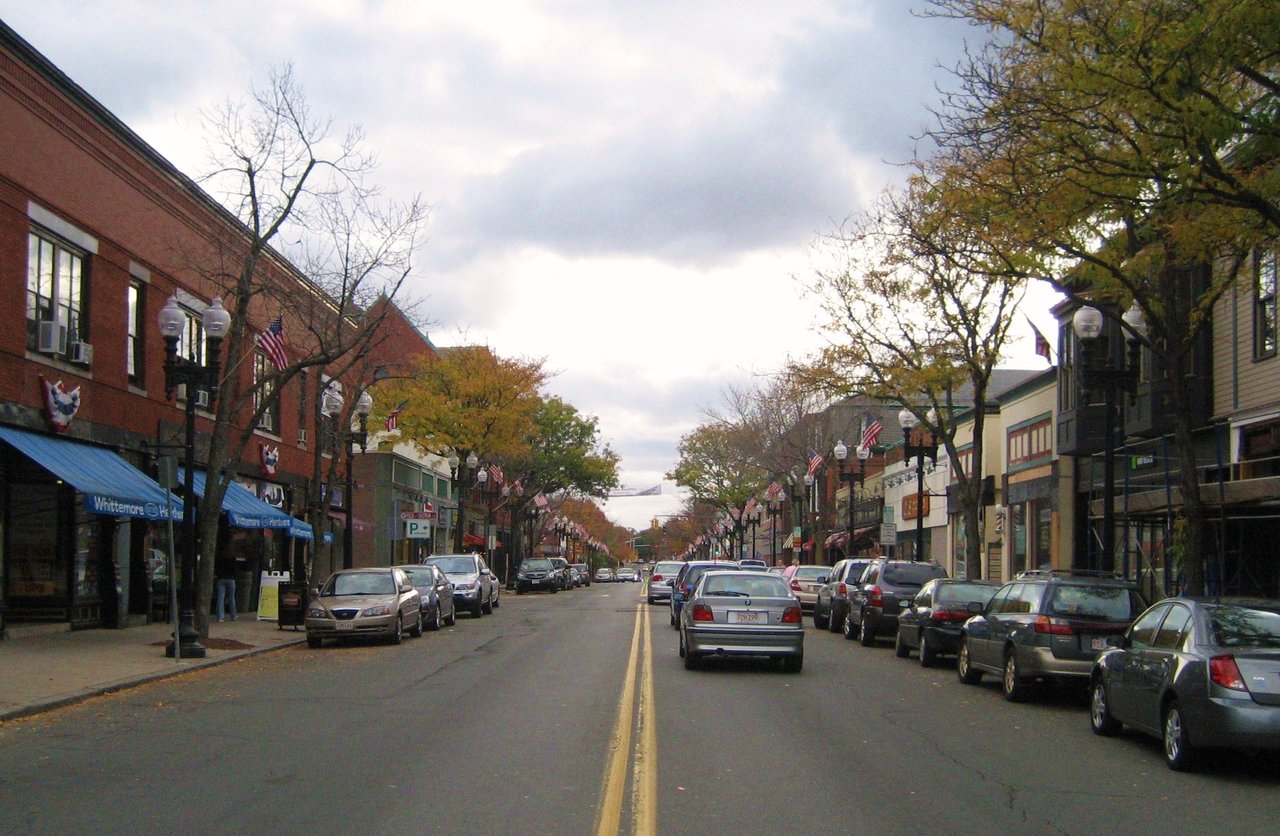
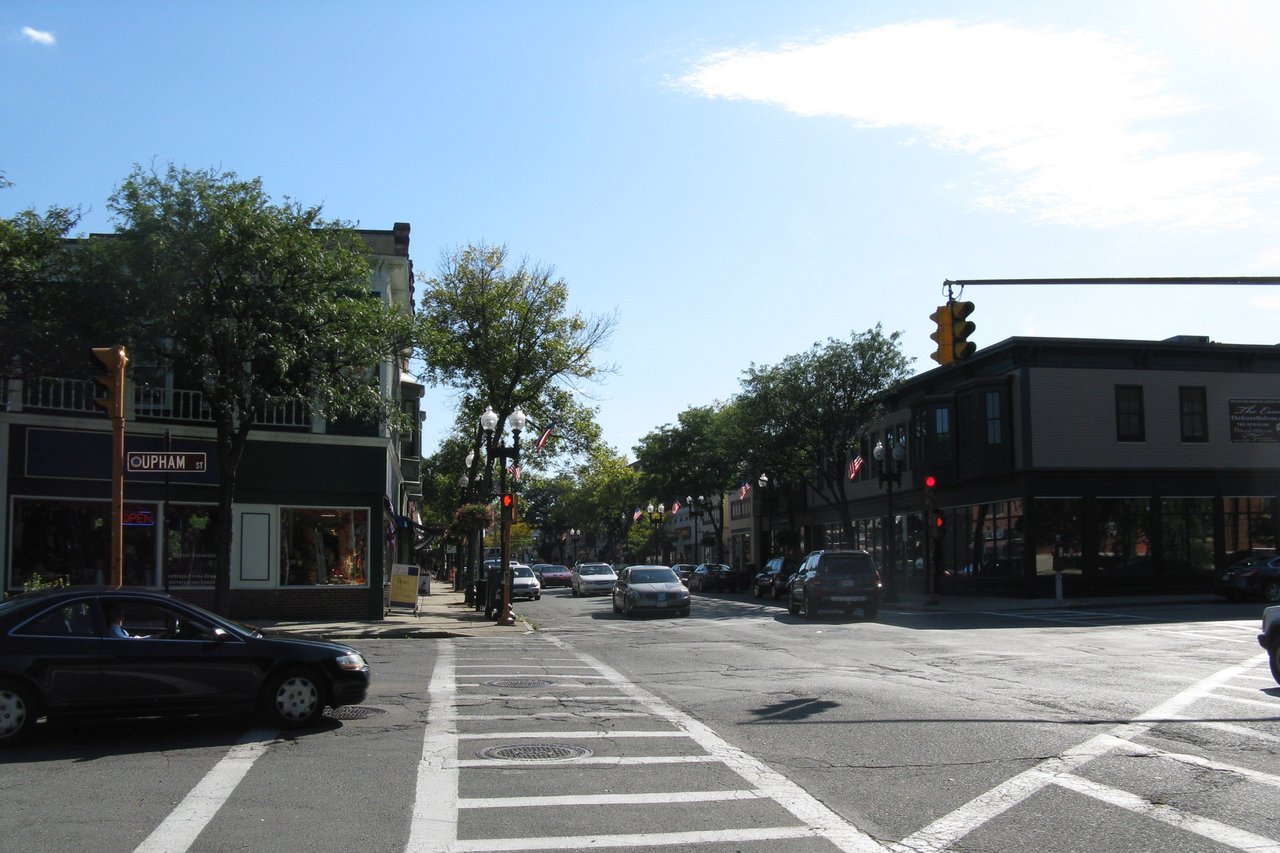
Melrose is a residential city in Middlesex County north of Boston, built around a Main Street downtown, Ell Pond, and three commuter rail stations. Its streets are known for 19th and early 20th century houses, and its eastern side rises into the woods and golf course of Mount Hood.
The land that became Melrose was part of the original Charlestown grant and then part of Malden, and it remained a quiet farming district for most of the colonial period. The first sawmill went up on Ell Pond in 1663. The Boston and Maine Railroad arrived in 1845 with depots at Wyoming and Melrose Highlands, and five years later, in 1850, Melrose became an independent town. Shoemaking grew into a major industry in the late 1800s, but the town remained mostly residential, and it later became a city.
Downtown Melrose along Main Street is listed on the National Register of Historic Places as the Melrose Town Center Historic District, with buildings from the late Victorian era and the early 20th century. Melrose borders Malden to the south, Saugus to the east, Wakefield to the north, Stoneham to the west, and Medford briefly at its southwest corner, with the Middlesex Fells Reservation just beyond its western edge.
The MBTA Haverhill Line stops at three stations in Melrose: Wyoming Hill, Melrose/Cedar Park, and Melrose Highlands, with service to North Station in Boston. Oak Grove station, just over the line in Malden, has Orange Line service and a Haverhill Line stop. MBTA bus routes 131, 132, and 137 connect Melrose with Malden Center. Route 99 crosses a short stretch of the city, and Interstate 93 and U.S. Route 1 are close by in neighboring towns.
Melrose real estate is mostly single-family houses from the railroad era forward. Italianate houses, some with cupolas, date from the town's early growth, and the late 1800s and early 1900s added Second Empire, Stick, Queen Anne, Shingle Style, Colonial Revival, and Craftsman homes. Melrose Highlands filled in with blocks of suburban houses in the 1890s and early 1900s, and bungalows, Dutch Colonials, and Colonial Revival houses followed between the world wars. Two-family houses and condominium conversions are found across the city as well.
Near Oak Grove, Lower Washington Street has newer apartment buildings, including converted mill buildings from the former Boston Rubber Shoe Company. The city's neighborhoods include Downtown, Melrose Highlands, Wyoming, Cedar Park, the East Side, Mount Hood, and Oak Grove and Pine Banks.
Mount Hood, on the city's east side, is a wooded park of about 300 acres with a city-owned 18-hole golf course, walking trails, and ponds. It was developed in the 1930s under the Works Progress Administration. Ell Pond, near the center of the city, is ringed by parkland, and Pine Banks Park, about 107 acres on the Malden line, has fields, a pond, and wooded trails.
Memorial Hall on Main Street, a granite building dedicated in 1912 as a Civil War memorial, has an 800-seat auditorium and is home to the Melrose Symphony Orchestra. It stands beside City Hall and the Central Fire Station, and the restaurants and shops of downtown Melrose stretch along Main Street nearby.
What kinds of homes are in Melrose?
Melrose is known for single-family homes from the railroad era forward, including Italianate, Queen Anne, Shingle Style, Colonial Revival, and Craftsman houses. Two-family houses, condominium conversions, and newer apartment buildings near Oak Grove add other options.
How do you get to Boston from Melrose?
The MBTA Haverhill Line stops at Wyoming Hill, Melrose/Cedar Park, and Melrose Highlands, with service to North Station. Oak Grove station, just over the Malden line, has Orange Line service into Boston.
What is Mount Hood in Melrose?
Mount Hood is a wooded park of about 300 acres on the city's east side, developed in the 1930s under the Works Progress Administration. It includes a city-owned 18-hole golf course, walking trails, and ponds.
To see homes for sale in Melrose, browse the listings below. Thinking of buying or selling in Melrose? Call (617) 848-9616 or get a free home valuation. Melrose is part of our North of Boston guide.
Photos: Grk1011/Stephen, CC BY-SA 3.0, and John Phelan, CC BY 3.0, via Wikimedia Commons.
29,488 people live in Melrose, where the median age is 44.3 and the average individual income is $65,038. Data provided by the U.S. Census Bureau.
Total Population
Median Age
Population Density Population Density This is the number of people per square mile in a neighborhood.
Average individual Income
There's plenty to do around Melrose, including shopping, dining, nightlife, parks, and more. Data provided by Walk Score and Yelp.
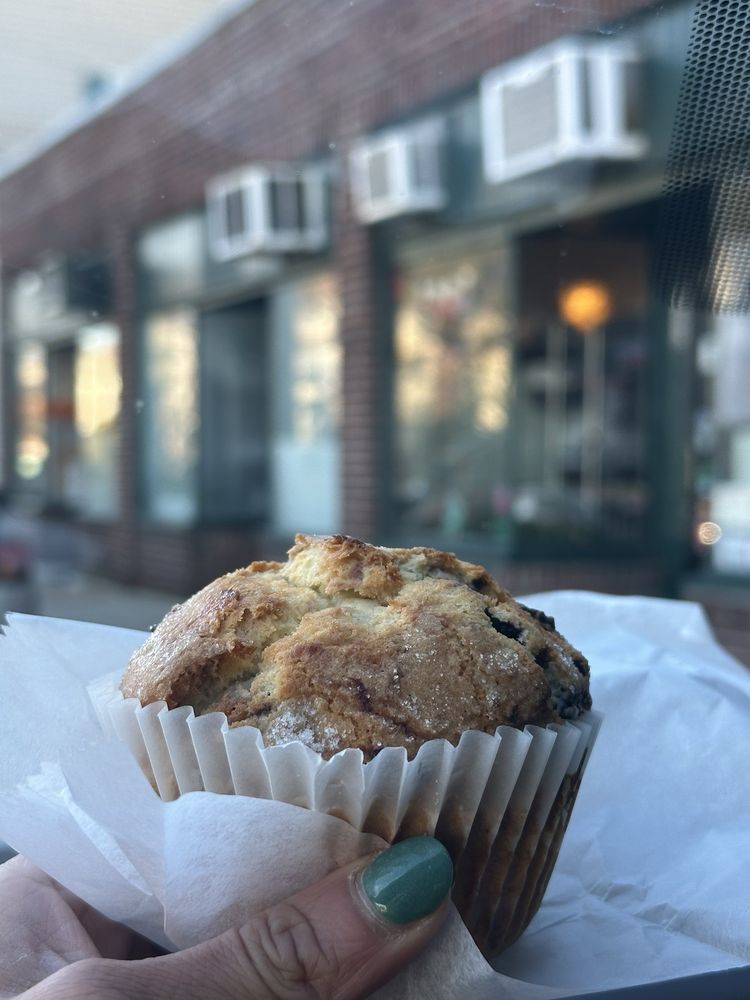
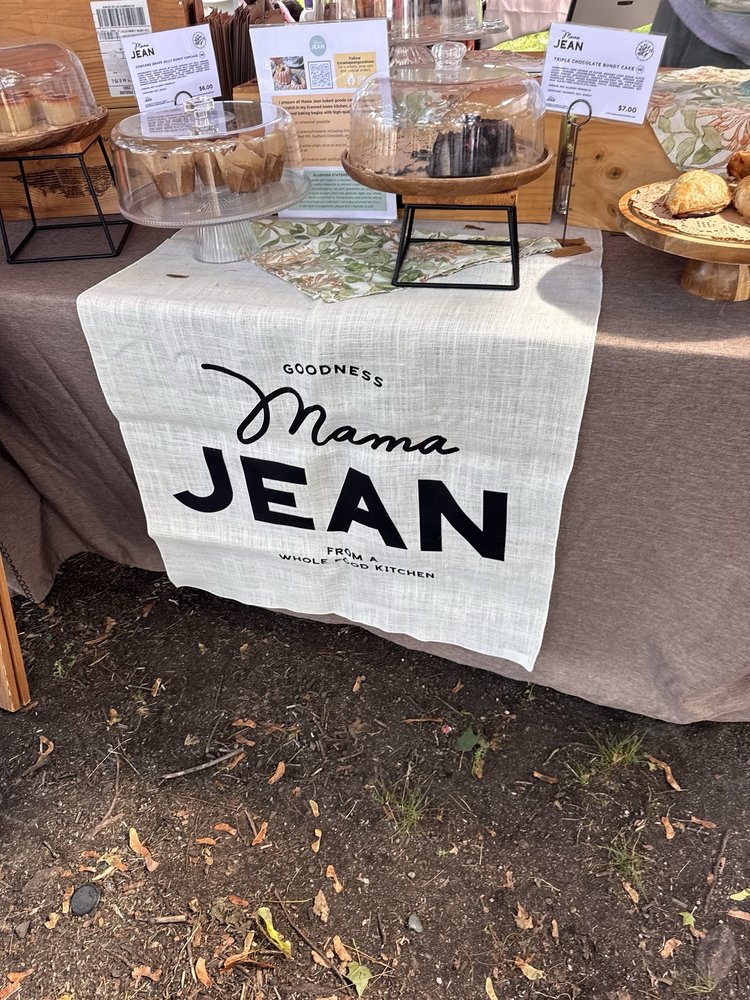
Explore popular things to do in the area, including Bohemian Coffeehouse, Melrose Farmer's Market, and Amer Soc of Abdominal Surgeons.
| Name | Category | Distance | Reviews |
Ratings by
Yelp
|
|---|---|---|---|---|
| Dining · $$ | 0.57 miles | 134 reviews | 4.4/5 stars | |
| Dining | 0.63 miles | 1 review | 5/5 stars | |
| Active | 0.3 miles | 0 reviews | 0/5 stars | |
| Active | 0.4 miles | 0 reviews | 0/5 stars | |
| Active | 0.78 miles | 1 review | 3/5 stars | |
| Active | 0.84 miles | 0 reviews | 0/5 stars | |
| Beauty | 0.18 miles | 4 reviews | 4.5/5 stars | |
| Beauty | 0.31 miles | 24 reviews | 4.5/5 stars | |
| Beauty | 0.34 miles | 49 reviews | 4/5 stars | |
| Beauty | 0.34 miles | 21 reviews | 4.4/5 stars | |
| Beauty | 0.39 miles | 7 reviews | 5/5 stars | |
| Beauty | 1.06 miles | 2 reviews | 3/5 stars | |
|
|
||||
|
|
||||
|
|
||||
|
|
||||
|
|
||||
|
|
Melrose has 12,368 households, with an average household size of 2.36. Data provided by the U.S. Census Bureau. Here’s what the people living in Melrose do for work — and how long it takes them to get there. Data provided by the U.S. Census Bureau. 29,488 people call Melrose home. The population density is 6,297 and the largest age group is Data provided by the U.S. Census Bureau.
Total Population
Population Density Population Density This is the number of people per square mile in a neighborhood.
Median Age
Men vs Women
Population by Age Group
0-9 Years
10-17 Years
18-24 Years
25-64 Years
65-74 Years
75+ Years
Education Level
Total Households
Average Household Size
Average individual Income
Households with Children
With Children:
Without Children:
Marital Status
Blue vs White Collar Workers
Blue Collar:
White Collar: