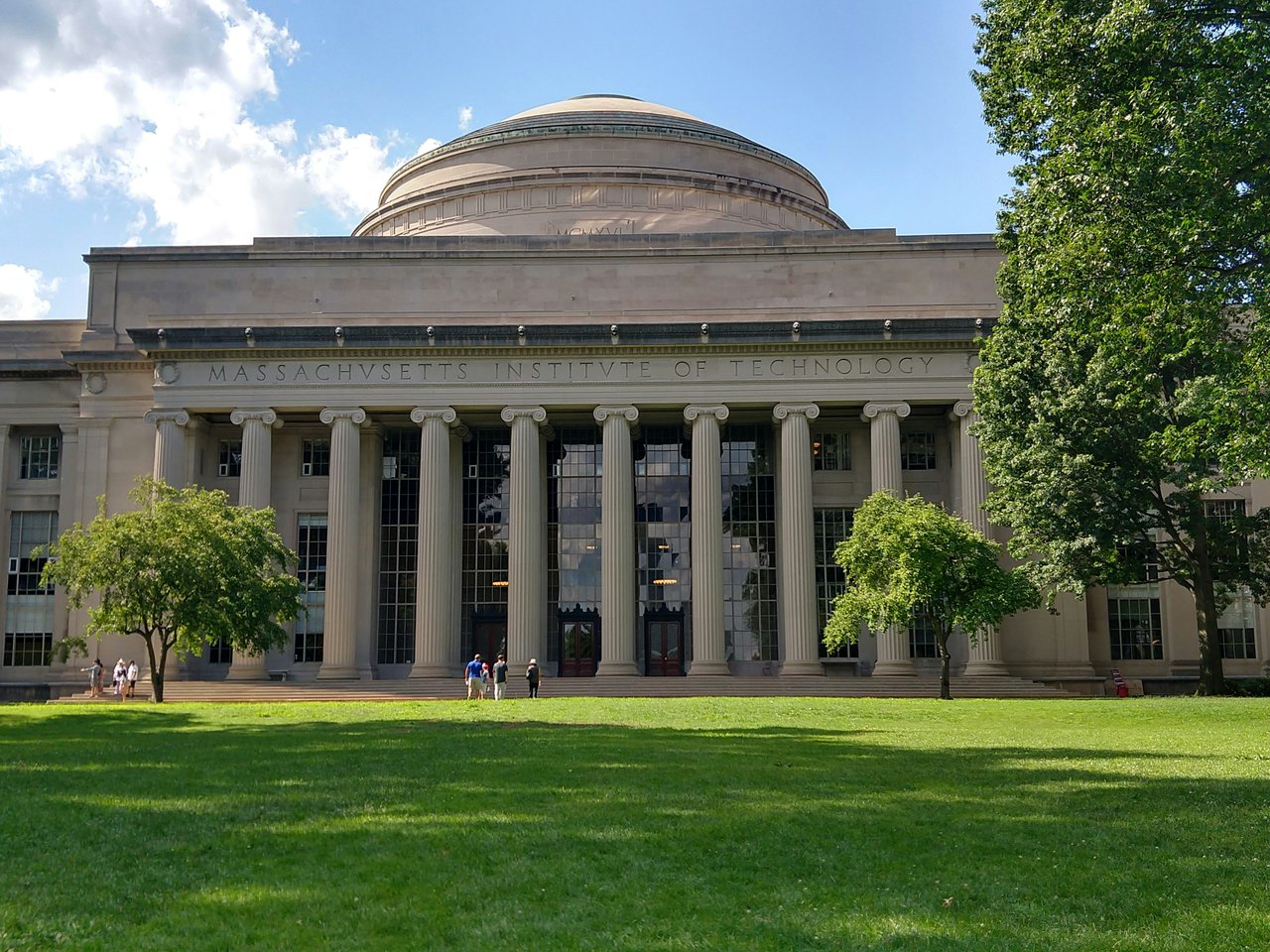
Cambridge is a city directly across the Charles River from Boston, home to Harvard University and the Massachusetts Institute of Technology. Its neighborhoods grew up around a series of squares, including Harvard, Central, Kendall, Inman, and Porter, and its housing ranges from 18th-century houses on Brattle Street to triple-deckers, brick apartment buildings, and modern condominium towers along the river.
In 1630 the Puritan leaders of the Massachusetts Bay Colony chose a site on the north bank of the Charles for a new town, called Newtowne until it was renamed Cambridge in 1638. Harvard College was founded here in 1636. Before the Revolution, a small group of Loyalists built grand houses along Tory Row, today's Brattle Street, and in 1775 and 1776 George Washington made his headquarters in the house later owned by Henry Wadsworth Longfellow, now a National Historic Site.
New bridges to Boston in 1793 and 1809 opened Cambridgeport and East Cambridge to development, and Central Square became the city's downtown, while East Cambridge grew into an industrial center of glass and furniture factories. Cambridge became a city in 1846, uniting Old Cambridge, Cambridgeport, and East Cambridge, and MIT moved here from Boston in 1916. Today the city counts thirteen official neighborhoods, and Kendall Square has become a center for technology and life sciences. Cambridge borders Somerville to the north, Arlington, Belmont, and Watertown to the west, and Allston/Brighton and the Back Bay across the river.
The Red Line runs through the city with stations at Kendall/MIT, Central, Harvard, Porter, and Alewife, and the Green Line stops at Lechmere in East Cambridge. Commuter rail trains on the Fitchburg Line stop at Porter. Memorial Drive follows the river, Massachusetts Avenue links the squares, and Route 2 and Fresh Pond Parkway connect to the west.
Most residential buildings in Cambridge are one-, two-, and three-family houses, many of them wood-frame homes from the 19th and early 20th centuries, and many two- and three-unit houses are divided into condominiums. Larger historic homes line Brattle Street and the surrounding blocks, protected in part by the Old Cambridge Historic District and neighborhood conservation districts such as Mid Cambridge and Avon Hill. East Cambridge and Kendall Square add converted factories and new mid- and high-rise buildings, including the Cambridge Crossing district.
Cambridge buildings on our site include:
Life in Cambridge revolves around its squares, each with its own shops, restaurants, bookstores, and performance spaces. Harvard Yard anchors Harvard Square, and the Charles River paths run along Memorial Drive. Fresh Pond Reservation offers 162 acres of open space around the city's reservoir, and Mount Auburn Cemetery, founded in 1831 as North America's first large designed landscape cemetery open to the public, straddles the line with Watertown.
What kinds of homes are in Cambridge?
Most residential buildings are one-, two- and three-family houses, many of them wood-frame homes from the 19th and early 20th centuries, and many two- and three-unit houses are divided into condominiums. East Cambridge and Kendall Square add converted factories and newer mid- and high-rise buildings.
How do you get to Boston from Cambridge?
The Red Line stops at Kendall/MIT, Central, Harvard, Porter and Alewife, and the Green Line stops at Lechmere in East Cambridge. Fitchburg Line commuter rail trains stop at Porter, and Memorial Drive follows the river.
Are there historic districts in Cambridge?
Yes. Larger historic homes on and around Brattle Street are protected in part by the Old Cambridge Historic District, and neighborhood conservation districts such as Mid Cambridge and Avon Hill cover other parts of the city.
To see homes for sale in Cambridge, browse the listings below. Thinking of buying or selling in Cambridge? Call (617) 848-9616 or get a free home valuation. Cambridge is part of our Greater Boston guide.
118,796 people live in Cambridge, where the median age is 30.4 and the average individual income is $78,723. Data provided by the U.S. Census Bureau.
Total Population
Median Age
Population Density Population Density This is the number of people per square mile in a neighborhood.
Average individual Income
There's plenty to do around Cambridge, including shopping, dining, nightlife, parks, and more. Data provided by Walk Score and Yelp.
Explore popular things to do in the area, including Wrap It Up Catering, Spare Change, and Pepperweed.
| Name | Category | Distance | Reviews |
Ratings by
Yelp
|
|---|---|---|---|---|
| Dining | 0.44 miles | 0 reviews | 0/5 stars | |
| Shopping | 0.36 miles | 0 reviews | 0/5 stars | |
| Shopping | 0.47 miles | 0 reviews | 0/5 stars | |
| Shopping | 0.79 miles | 86 reviews | 4.2/5 stars | |
| Active | 0.8 miles | 0 reviews | 0/5 stars | |
| Active | 0.8 miles | 0 reviews | 0/5 stars | |
| Active | 0.8 miles | 0 reviews | 0/5 stars | |
| Active | 0.82 miles | 0 reviews | 0/5 stars | |
| Active | 0.88 miles | 0 reviews | 0/5 stars | |
| Active | 0.9 miles | 0 reviews | 0/5 stars | |
| Active | 0.9 miles | 0 reviews | 0/5 stars | |
| Active | 0.91 miles | 0 reviews | 0/5 stars | |
| Active | 0.92 miles | 0 reviews | 0/5 stars | |
| Active | 0.95 miles | 0 reviews | 0/5 stars | |
| Nightlife | 0.95 miles | 1 review | 4/5 stars | |
| Beauty | 0.5 miles | 0 reviews | 0/5 stars | |
| Beauty | 0.79 miles | 1 review | 5/5 stars | |
|
|
||||
|
|
||||
|
|
||||
|
|
||||
|
|
||||
|
|
Cambridge has 49,444 households, with an average household size of 2.05. Data provided by the U.S. Census Bureau. Here’s what the people living in Cambridge do for work — and how long it takes them to get there. Data provided by the U.S. Census Bureau. 118,796 people call Cambridge home. The population density is 18,571 and the largest age group is Data provided by the U.S. Census Bureau.
Total Population
Population Density Population Density This is the number of people per square mile in a neighborhood.
Median Age
Men vs Women
Population by Age Group
0-9 Years
10-17 Years
18-24 Years
25-64 Years
65-74 Years
75+ Years
Education Level
Total Households
Average Household Size
Average individual Income
Households with Children
With Children:
Without Children:
Marital Status
Blue vs White Collar Workers
Blue Collar:
White Collar: