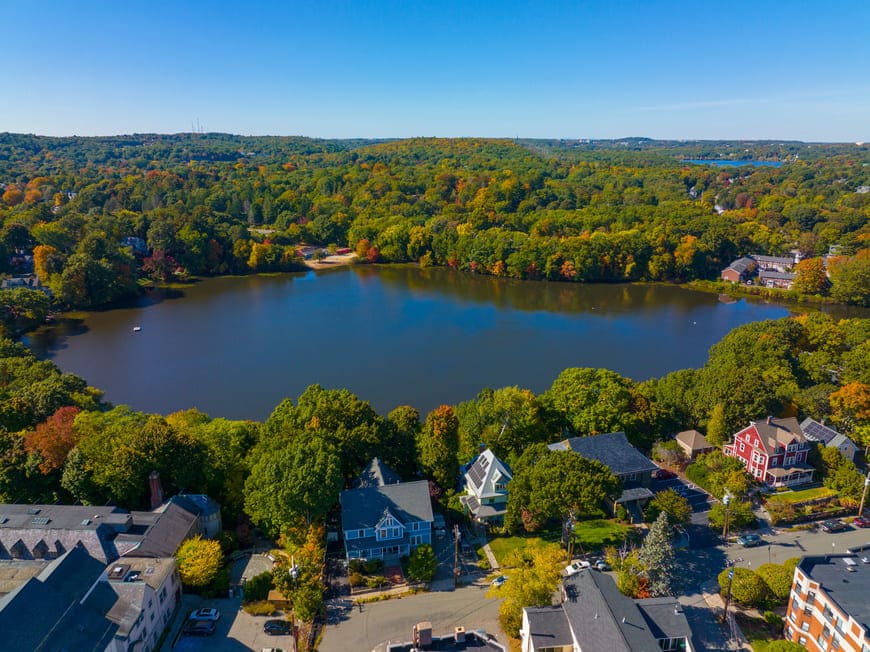
Winchester is a town north of Boston in the Mystic River valley, set around the Aberjona River, Wedge Pond, and the Mystic Lakes. Its compact, historic town center sits beside a commuter rail station, and its streets are lined with Victorian, Shingle Style, and Colonial Revival houses built as Boston's railroad suburbs grew.
For two centuries the area was the southern part of Woburn, a farming district with mills along the Aberjona River. The Middlesex Canal arrived in 1803 and the Boston and Lowell Railroad in 1835, bringing small factories and tanneries and an easy connection to Boston. In 1850 the village broke away from Woburn, joining with land from Medford and West Cambridge, today's Arlington, and incorporated as a town. It was nearly named Columbus, but the founders chose to honor Lt. Col. William Parsons Winchester, a Boston businessman who gave the new town three thousand dollars and died within months, never having visited.
From the 1870s on, Boston business owners built homes here, and by 1900 the mills had given way to parks and residential streets. The town borders Medford, Arlington, Lexington, Woburn, and Stoneham.
The Lowell Line stops at two stations in town, Winchester Center and Wedgemere, with trains to North Station. Interstate 93 runs just to the east, Route 3 crosses the west side of town, and the Mystic Valley Parkway follows the lakes south toward Medford and Arlington.
Winchester is largely a town of single-family homes, along with a smaller number of condominiums and townhouses near the center. Greek Revival and Italianate houses from the mid-1800s stand close to the town center, and the late 19th century added Mansard, Queen Anne, Shingle Style, and Colonial Revival homes in areas such as the Firth development southwest of Wedge Pond and the Wildwood area. Many were architect-designed, giving the town a wide range of high-style houses. The west side remained farmland until after World War II, when it filled with Colonial-style homes, and similar houses went up around the Mystic Lakes.
One of the few surviving grand estates is the Sanborn House on High Street, a Beaux-Arts mansion completed in 1907 for Oren Sanborn, son of a co-founder of Chase and Sanborn coffee. Listed on the National Register of Historic Places, it is now home to the Winchester Historical Society.
The town center, listed on the National Register as the Winchester Center Historic District, follows the Aberjona River along Main Street, Church Street, and Mount Vernon Street, with the 1887 Town Hall, the Town Common, and Manchester Field, laid out as a park in 1894. Local shops, restaurants, and cafes line the blocks around the train station.
Water shapes much of the town. Wedge Pond sits beside the center, and Upper Mystic Lake, shared with Arlington and Medford, is a state park with shoreline paths and non-motorized boating. Wright-Locke Farm preserves a working farm landscape on the west side.
What kinds of homes are in Winchester?
Winchester is largely single-family homes, with a smaller number of condominiums and townhouses near the center. Greek Revival and Italianate houses stand near the town center, Mansard, Queen Anne, Shingle Style and Colonial Revival homes fill areas such as the Firth development and Wildwood, and the west side has postwar Colonial-style homes.
How do you get to Boston from Winchester?
The Lowell Line stops at Winchester Center and Wedgemere stations, with trains to North Station. Interstate 93 runs just to the east, Route 3 crosses the west side of town, and the Mystic Valley Parkway follows the lakes south toward Medford and Arlington.
What lakes and ponds are in Winchester?
Winchester is set around the Aberjona River, Wedge Pond and the Mystic Lakes. Wedge Pond sits beside the town center, and Upper Mystic Lake, shared with Arlington and Medford, is a state park with shoreline paths and non-motorized boating.
To see homes for sale in Winchester, browse the listings below. Thinking of buying or selling in Winchester? Call (617) 848-9616 or get a free home valuation. Winchester is part of our North of Boston guide.
22,862 people live in Winchester, where the median age is 43 and the average individual income is $104,586. Data provided by the U.S. Census Bureau.
Total Population
Median Age
Population Density Population Density This is the number of people per square mile in a neighborhood.
Average individual Income
There's plenty to do around Winchester, including shopping, dining, nightlife, parks, and more. Data provided by Walk Score and Yelp.
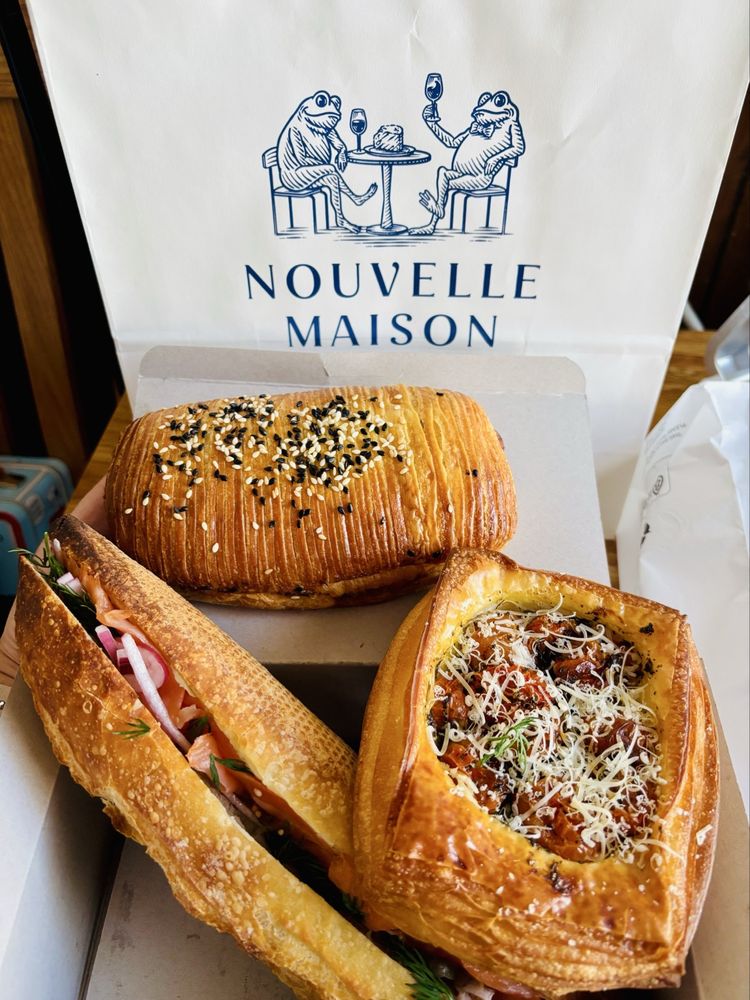
Explore popular things to do in the area, including A Tavola, Nouvelle Maison, and Philip R's Sorbets.
| Name | Category | Distance | Reviews |
Ratings by
Yelp
|
|---|---|---|---|---|
| Dining · $$$ | 0.37 miles | 204 reviews | 3.9/5 stars | |
| Dining | 0.39 miles | 26 reviews | 4.3/5 stars | |
| Dining · $$ | 0.54 miles | 2 reviews | 5/5 stars | |
| Nightlife | 1.02 miles | 0 reviews | 0/5 stars | |
|
|
||||
|
|
||||
|
|
||||
|
|
||||
|
|
||||
|
|
Winchester has 8,054 households, with an average household size of 2.8. Data provided by the U.S. Census Bureau. Here’s what the people living in Winchester do for work — and how long it takes them to get there. Data provided by the U.S. Census Bureau. 22,862 people call Winchester home. The population density is 3,790 and the largest age group is Data provided by the U.S. Census Bureau.
Total Population
Population Density Population Density This is the number of people per square mile in a neighborhood.
Median Age
Men vs Women
Population by Age Group
0-9 Years
10-17 Years
18-24 Years
25-64 Years
65-74 Years
75+ Years
Education Level
Total Households
Average Household Size
Average individual Income
Households with Children
With Children:
Without Children:
Marital Status
Blue vs White Collar Workers
Blue Collar:
White Collar: